
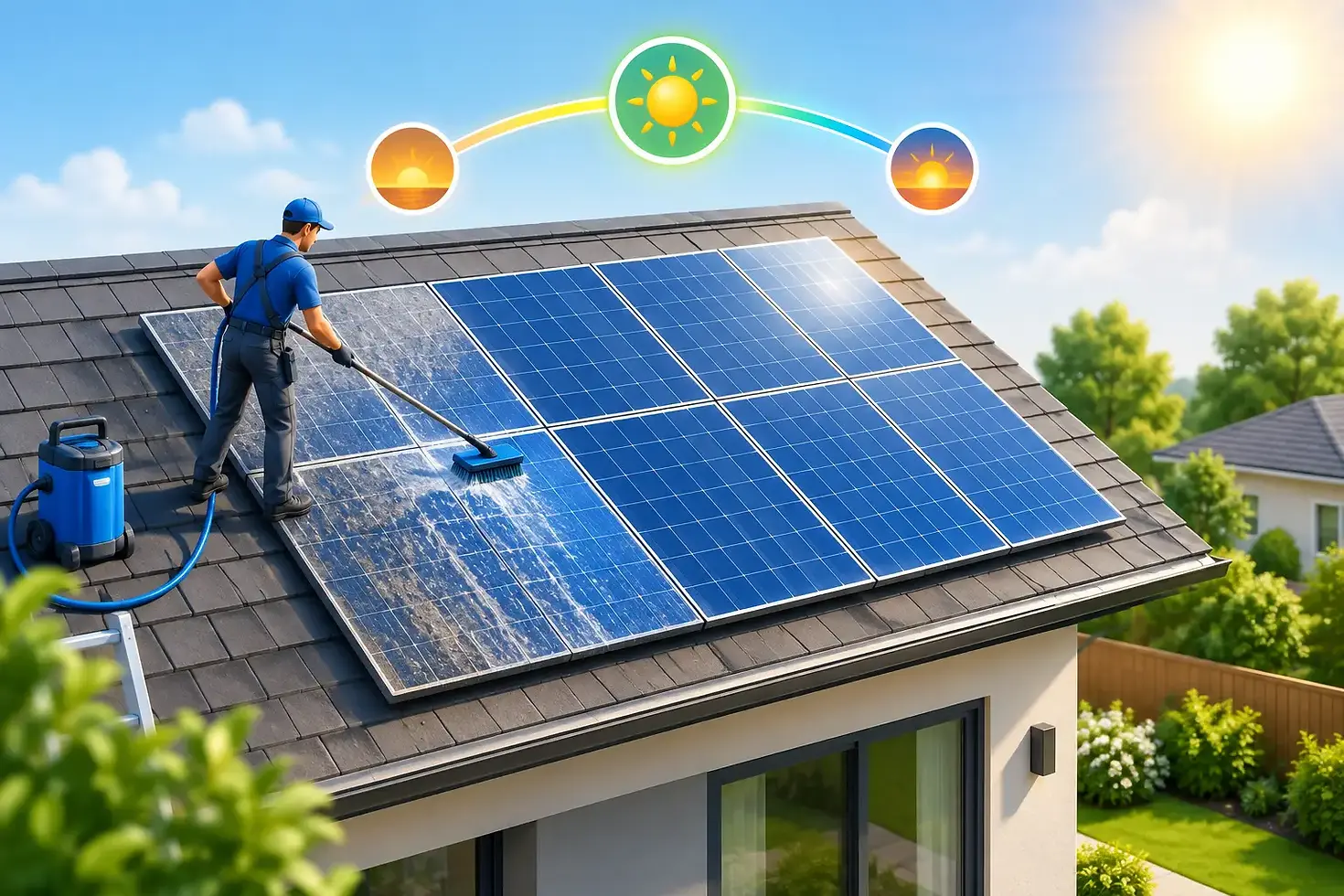
Best Time for Solar Cleaning for Homeowners

A layer of spring pollen, wildfire haze, bird droppings, or construction dust can make a solar system look overdue for attention. But grabbing a hose at noon is not the answer. The best time for solar cleaning protects the glass, avoids thermal stress, keeps the work safer, and gives you a clearer look at whether dirt is truly affecting production.
For most homeowners, the right window is a cool, dry morning after dew has lifted, or a mild evening when panels have had time to cool down. The right season and frequency depend on your roof, local conditions, and the kind of buildup on the panels. In Utah and Idaho, that can change quickly between pollen season, summer dust, fall leaves, and winter snow.
Best Time for Solar Cleaning: Cool, Dry Hours
Solar panels work hard under direct sunlight, and their surface temperature can climb far above the outdoor air temperature. Applying cool water to hot glass may create unnecessary temperature stress. It can also cause water to evaporate quickly, leaving mineral spots behind before the surface can be properly rinsed.
Early morning is usually the best choice once the roof has dried enough to be safe. Panels are cooler, the sun is less intense, and stubborn grime has had time to soften with overnight moisture. A mild late afternoon or early evening can also work well, provided there is still enough light for a technician to inspect the system and move safely around the roof.
Avoid cleaning in the middle of a hot, cloudless day. It is harder on the equipment, less effective, and riskier for anyone working at height. This is one reason professional cleaning is often the better call for steep roofs, multi-story homes, or systems with limited roof access.
Do Not Clean During Freezing Conditions
Cold weather adds a different set of concerns. Cleaning when temperatures are at or below freezing can create slippery roof conditions and allow water to freeze around the panels, mounting equipment, or walkways. Wait for a dry day with temperatures safely above freezing.
Snow is not always a reason to clean. Light snow often slides off tilted panels as conditions warm. Trying to scrape it away can scratch glass, damage wiring, or put a homeowner in a dangerous position. If snow, ice, or debris remains in place and production appears unusually low, a professional inspection is the safer next step.
Choose the Right Season, Not Just the Right Day
There is no single date on the calendar that works for every solar home. The best time for solar cleaning is usually after the local event that created the dirt in the first place.
In spring, pollen can leave a yellow film that reduces the amount of light reaching the cells, especially if rain is scarce. A cleaning after the heaviest pollen period can be worthwhile. In dry summer conditions, windblown dust and nearby construction can build up faster than many homeowners expect. If your home is near farmland, unpaved roads, a busy development, or open desert terrain, summer inspections matter even more.
Late summer and early fall may bring wildfire smoke and ash. Ash can be abrasive when dry, so it should not be aggressively brushed across the panel surface. A careful rinse and appropriate cleaning method are important. In fall, leaves, needles, and debris may collect around panel edges, roof valleys, and gutters. The issue is not only output - trapped debris can hold moisture against the roof and make it harder to spot developing problems.
Winter is generally a good time for visual checks rather than routine washing. Watch for heavy debris, persistent snow coverage, damaged critter barriers, or signs that production is well below normal. Schedule cleaning when conditions are dry, safe, and above freezing.
How Often Should Solar Panels Be Cleaned?
For many homes, one professional cleaning and inspection each year is a sensible starting point. Some properties benefit from two visits, particularly where bird activity, dust, tree debris, hard water, or frequent smoke exposure are part of the picture.
The right schedule is based on conditions, not a sales pitch. Panels that receive regular rainfall may need less frequent cleaning than panels beneath trees or near a bird roost. Rain can rinse off loose dust, but it does not reliably remove sticky pollen, bird droppings, oily film, or debris caught along the frame.
Watch for visible buildup, but also pay attention to performance. A sudden production drop does not automatically mean the panels are dirty. It may point to shading, a monitoring issue, a loose connection, inverter trouble, rodent damage, or a panel-level fault. Cleaning is valuable maintenance, but it is not a substitute for proper diagnostics.
Bird Droppings Need Faster Attention
Bird droppings are different from ordinary dust. They can block a concentrated area of a panel and create a hot spot where cells operate less efficiently. Large or repeated deposits should be addressed sooner rather than waiting for the next seasonal visit.
If birds are nesting beneath the array, cleaning alone will not solve the problem. Birds and other critters can leave behind nesting material, chew wiring, block drainage, and create ongoing messes. Pairing cleanup with professionally installed bird or critter proofing helps protect the system and reduces repeat service calls.
Protect Your Panels and Your Roof While Cleaning
A solar array is part of a larger roofing system. The goal is not simply to make the glass shine. It is to clean without putting pressure on modules, disturbing wiring, damaging roof materials, or compromising the mounts and flashing that keep water out of your home.
Avoid abrasive pads, metal tools, harsh chemicals, pressure washers, and strong detergents. These can scratch the glass, wear down protective coatings, force water into areas it does not belong, or create warranty concerns. Do not stand, lean, or place heavy equipment on panels.
Homeowners should also be careful with hose water. In areas with hard water, a rushed rinse can leave mineral spotting. A trained crew can use the right water quality, soft tools, and cleaning process for the job while inspecting for obvious concerns such as cracked glass, loose clamps, exposed wiring, pest activity, and debris around the array.
Roof access is the biggest issue. A one-story home with a low-slope roof is not the same as a steep two-story roof with a large array. If access requires walking near fragile tile, navigating a slick metal roof, or working around skylights and roof edges, professional service is the smart investment.
Plan Cleaning Around Roof Work and Repairs
If your roof is being replaced, repaired, or upgraded, do not schedule panel cleaning as a separate first step. The panels may need to be removed and reinstalled before roofing work begins. Cleaning can be completed after the system has been reset, tested, and confirmed to be operating properly.
This is also a good time to inspect the mounting hardware, roof penetrations, conduit, critter guards, and wiring. A professional removal and reinstall should prioritize correct labeling, careful handling, code-compliant reinstallation, and a leak-proof approach that protects the new roof. It is far more efficient than treating each issue as an unrelated project.
NEX Solar helps homeowners coordinate cleaning, diagnostics, pest protection, and solar removal and reinstall work with the same service-first attention to detail. That matters when you need more than a surface wash and want confidence that the whole system is being looked after.
When Cleaning Is Not the Real Fix
A clean array should produce consistently, but output naturally changes with weather, daylight hours, shading, and temperature. Before assuming the panels need washing, compare current production with the same period last year if your monitoring app provides that information. A modest change may be seasonal. A sharp or sustained drop deserves a closer look.
Call for diagnostics if panels look clean but production is down, if your monitoring system reports an error, if an inverter is making unusual noise, or if you see loose wiring, damaged panels, animal activity, or water staining near roof penetrations. Prompt attention can prevent a small service issue from becoming an expensive repair.
A well-timed cleaning visit should leave you with more than clearer panels. It should give you confidence that your solar system is clean, safe to operate, and still protecting the investment on your roof.


Comments