.png)
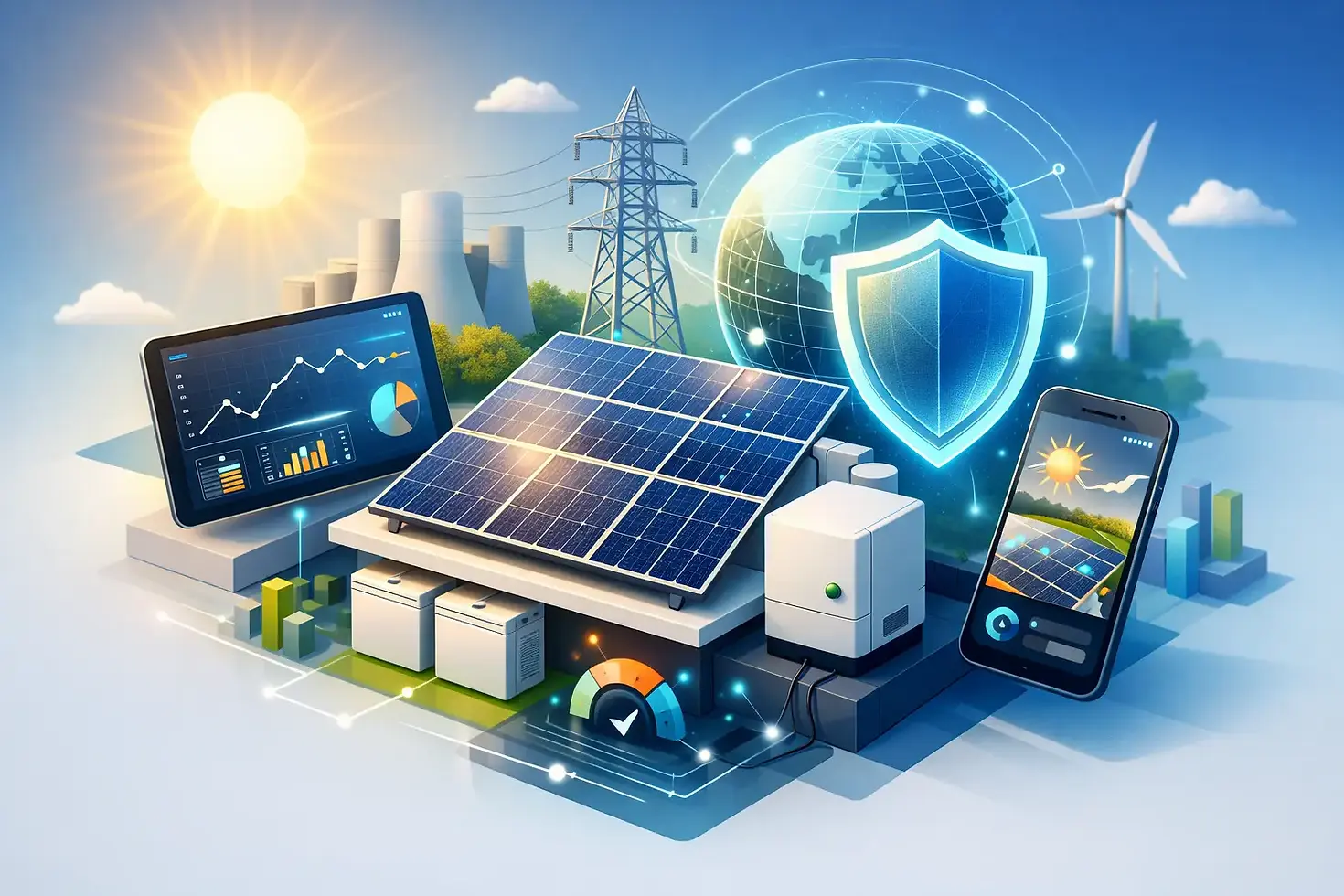
Solar Production Monitoring That Protects Your Investment

A solar app that shows green bars and a reassuring production total can make it easy to assume everything is working as it should. But solar production monitoring is most valuable when it helps you catch the changes that are not obvious from the ground: a string that has gone offline, a failed inverter, panel damage, pest activity, or a system that never returned to full output after roof work.
For homeowners, monitoring is not about becoming a solar technician. It is about knowing whether your system is protecting the investment you made, and recognizing when it is time to call a qualified service team.
What solar production monitoring actually tells you
Most modern solar systems include an inverter app, web portal, or monitoring gateway. Depending on the equipment installed, it may show current production, daily and monthly energy totals, lifetime output, and sometimes the performance of individual panels.
That information is useful, but it needs context. A lower-production day does not automatically mean there is a problem. Cloud cover, smoke, snow, shorter winter days, and seasonal sun angles all affect output. In Utah and Idaho, a clear July day and a cloudy January day should not be expected to produce the same amount of energy.
The real value comes from comparing similar conditions over time. If your system produced reliably last spring and suddenly falls well below its usual range this spring, that deserves attention. Likewise, a flat production graph in the middle of a sunny day is a clear signal that something may be wrong.
Production is different from home energy use
Many homeowners see a number in their solar app and assume it represents their entire household energy picture. Usually, it does not. Solar production is the electricity your panels generate. Home consumption is the electricity your home uses. Grid import is what you still purchase from the utility, while export is excess solar sent back to the grid.
Without consumption monitoring, a system can produce normally while your electric bill rises because household usage has increased. A new electric vehicle, hot tub, HVAC issue, or changes in heating and cooling habits can all shift the bill. Production monitoring tells you how the solar equipment is performing. It does not always explain every change in utility costs.
What a healthy production pattern looks like
A healthy system generally follows a predictable daily curve. Production ramps up after sunrise, reaches its highest point around midday or early afternoon, then tapers off toward sunset. The exact shape varies with roof direction, shading, weather, and system design.
You do not need to watch that curve every day. Checking it monthly and after major events is usually enough for most homeowners. Look for a production pattern that makes sense for the season and weather, rather than chasing an identical daily number.
Your original proposal, installation documents, or past production history can provide a useful baseline. If you have access to several years of data, compare the same month year over year. Small differences are normal. A sudden and sustained drop is not something to ignore.
Signs your solar system needs a closer look
Monitoring can reveal a problem before it becomes a larger loss in production. Pay attention when a sunny-day graph is unusually low, when the system reports an error or stops reporting altogether, or when output falls sharply compared with similar periods from prior years.
There are also physical clues that matter. Bird nests beneath panels, visible staining, chewed wiring, cracked modules, a flashing inverter light, or new roof work near the array all warrant a professional assessment. A monitoring app cannot inspect roof penetrations, verify wiring condition, or confirm that critter damage is not creating a safety concern.
After a storm, it is reasonable to check your app first. If production is normal and there is no visible damage, the system may be fine. If output is missing or substantially lower, do not climb onto the roof to investigate. Solar equipment involves electrical components, roof safety risks, and manufacturer-specific requirements.
Why monitoring matters after roof replacement or solar removal
Roof replacement is one of the moments when production monitoring becomes especially important. Panels should be professionally detached, stored, and reinstalled so the roof and solar system are both protected. Once the system is back in place, homeowners need confirmation that the array is producing as expected.
A proper post-reinstall check goes beyond opening the app and seeing a number. The system should be inspected, electrical connections verified, equipment commissioned correctly, and production reviewed once operating conditions allow. If panel-level monitoring is available, it can help identify whether one module or one section is underperforming.
This is also why homeowners should be cautious about treating solar removal and reinstall as a basic labor task. The lowest quote can become expensive if it leads to roof leaks, damaged equipment, missed electrical issues, or a system that operates below its potential for months. Skilled solar service protects the roof, the equipment, and the performance data you rely on.
Common reasons production drops
Not every drop in output has the same cause, and the right fix depends on the system and the circumstances. Soiling can reduce production, especially after long dry periods or when dust, pollen, and debris build up. Panel cleaning may help, but it is not a cure-all. Routine rain often removes light dust, while stubborn buildup, bird droppings, and nearby construction dust can have a greater effect.
Shading is another common factor. Tree growth, new construction, or even a satellite dish installed where it casts a shadow can change system output. On some systems, shading affects an entire string more heavily than others. Panel-level equipment may limit that impact, but it does not eliminate the need to address the source of new shade when possible.
Equipment failures can also be the cause. Inverters, optimizers, rapid shutdown devices, breakers, disconnects, communications hardware, and wiring can all develop issues. A monitoring outage may be as simple as a lost Wi-Fi connection, but it can also hide a production problem. If the app is offline for more than a short period, it is worth determining whether the solar system is still generating.
Pests deserve particular attention. Birds and small critters can nest under panels, damage wiring, and leave debris that interferes with drainage and roof maintenance. Critter proofing helps prevent repeat problems while protecting the space beneath the array.
A practical monitoring routine for homeowners
A simple routine keeps monitoring useful without turning it into another household chore. Check your system once a month, ideally around the same time each month. Review the monthly total, compare it with the same month last year if that data is available, and scan for alerts or missing reporting.
After a major storm, roof project, equipment repair, or extended period of heavy snow, check that the system returns to normal operation when conditions improve. Keep screenshots of significant alerts or unusual graphs. That record can help a solar technician diagnose the issue faster.
If your system has panel-level monitoring, avoid assuming a single lower-reading panel is automatically defective. Partial shade, snow coverage, and normal differences in roof position can affect individual readings. What matters is whether a panel or group of panels remains consistently below comparable modules under similar conditions.
When to call for solar diagnostics
Call for professional solar diagnostics when production has dropped substantially without a clear weather-related reason, the inverter shows an error, the system has stopped communicating, or you suspect damage, pests, or electrical trouble. The same applies if your system was removed for a roof replacement and has not returned to expected production after reinstall.
A qualified technician can inspect the full system instead of guessing from the app alone. That may include reviewing monitoring data, testing electrical output, checking inverters and connections, inspecting panels and mounting, and looking for roof or critter-related concerns. The goal is not just to make the app look normal. It is to make sure the system is safe, secure, and producing the way it should.
NEX Solar approaches service work with that full-picture mindset, from diagnostics and panel cleaning to bird proofing and careful solar removal and reinstall. Homeowners deserve clear answers, quality workmanship, and protection for both the roof and the solar investment.
Your monitoring portal is a useful early-warning system. When the numbers stop making sense, acting promptly can protect months of lost production and give you confidence that your solar system is still working for your home.


Comments